Lepidoptera

  • Monday Moth

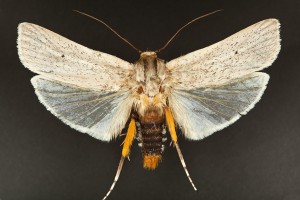
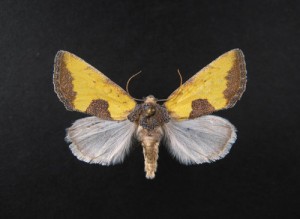
    Back to the Monday Moth!  This beautiful insect is Stiria dyari (Noctuidae) collected on a February trip outside of Cataviña, Baja California Mexico.  I believe the host plants are still unknown, but all of the moths in the genus Stiria have these brilliant yellow forewings that help camouflage them on the stem of a yellow…
  • Busy as a Moth

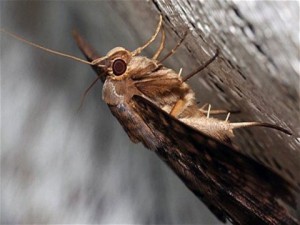
    That’s how the saying goes, right?  Two weeks ago I participated in the 5th annual National Geographic BioBlitz over in Saguaro National Park in Tucson, Arizona.  It was a great excuse to get back into the field and it was the first time I collected Arizona in the fall.  Temps were still pushing the mid…

  • Monday Moth

      Another huge Australian “microlep”, (probably) Maroga setiotricha: Xylorictidae – measuring in at 60mm.  With wings like this they must make formidable fliers. According to the Xyloryctinae Moths of Australia blog the larvae are stem borers into Acacia sp. (Mimosaceae).  This specimen was collected in November of 1962 by Ed Ross in Canoona, Queensland.

  • Monday Moth

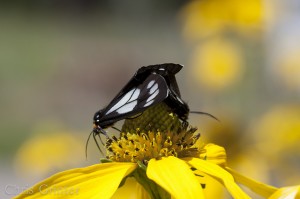
      This Monday moth is an Arctiinae, Gnophaela vermiculata.  These beautiful day flying moths were abundant on yellow Helianthus flowers around 9000′ in the Santa Fe National Forest, New Mexico.  Caterpillars feed on bluebells, but the adults prefer the highest quality nectar source in the area – which fortunately makes for easy and attractive photo subjects.

  • The Soaring Microcosmos

    [youtube kZyIN23Cy4Y 480 360] The microscopic insect world is a very different one from ours and we rarely are given glimpses into it.  Thanks in part to the impressive Phantom camera system and the Flight Artists project researchers have filmed the minute (1mm!) Trichogramma wasp (Chalcidoidea) in flight.  These insects are egg parasites of Lepidoptera (amongst…