Fuzzy Pink Monday Moth
A Monday moth in fuzzy pink – Dryocampa rubicunda (Saturniidae). These rosy maple moths are pretty common in southern Illinois, but always a stunner when they come to light.

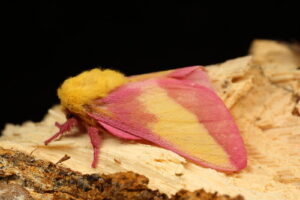
A Monday moth in fuzzy pink – Dryocampa rubicunda (Saturniidae). These rosy maple moths are pretty common in southern Illinois, but always a stunner when they come to light.
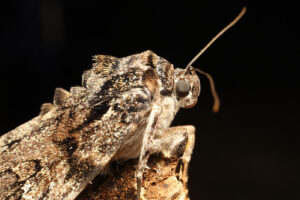
Not an uncommon moth, but a distinguished looking one. This is Catocala ilia (Erebidae) ((formerly Noctuidae)), and it feeds on a handful of Oaks. It came into my light over the weekend in Southern Illinois, down in the Trail of Tears State Forest. As with so many other moths this widespread species has a number…
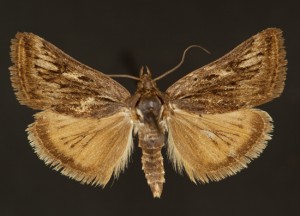
Today’s moth is an understated brown Crambidae, Loxostege brunneitincta. While this isn’t a particularly captivating moth it does have an interesting story that illustrates the need for scientific collections and museum loans. If you read the label image you will notice the moth was originally collected in 1927 by E. P. Van Duzee in Truckee,…
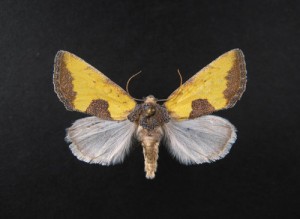
Back to the Monday Moth! This beautiful insect is Stiria dyari (Noctuidae) collected on a February trip outside of Cataviña, Baja California Mexico. I believe the host plants are still unknown, but all of the moths in the genus Stiria have these brilliant yellow forewings that help camouflage them on the stem of a yellow…
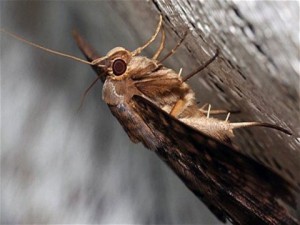
Back from hiatus and back to the Genius of the Press insect-news-failure series! Fresh off the presses from last year, the Department for Environment, Food and Rural Affairs in the UK was shut down for a massive infestation of clothes moths. The picture shown here from “The Nation” story is a far cry from a…
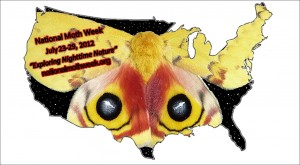
The first annual National Moth Week will be this summer, July 23-29, 2012! This is the first event of its kind in the US (it has been popular in the UK for quite some time) and is an attempt to encourage people to head outside and explore their often overlooked moth fauna. The US has an…
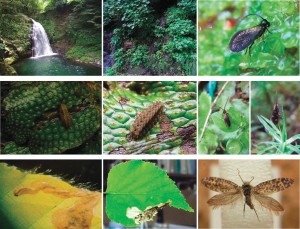
Everyone is likely familiar with the standard model for a moth or butterfly – a straw-like proboscis to reach nectar hidden within flowers. The vast majority of the Lepidoptera have diversified alongside the radiation of angiosperm plants, becoming one of the most diverse and abundant orders of life on earth. This paradigm however does not apply…
That’s how the saying goes, right? Two weeks ago I participated in the 5th annual National Geographic BioBlitz over in Saguaro National Park in Tucson, Arizona. It was a great excuse to get back into the field and it was the first time I collected Arizona in the fall. Temps were still pushing the mid…
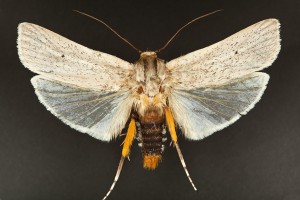
Another huge Australian “microlep”, (probably) Maroga setiotricha: Xylorictidae – measuring in at 60mm. With wings like this they must make formidable fliers. According to the Xyloryctinae Moths of Australia blog the larvae are stem borers into Acacia sp. (Mimosaceae). This specimen was collected in November of 1962 by Ed Ross in Canoona, Queensland.
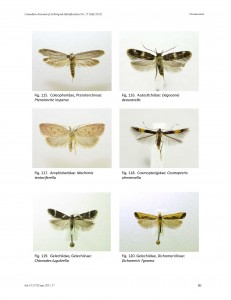
A few months ago a magnificent key to the Lepidoptera of Canada (all of them) was published by Jason Dombroskie – a PhD student from the U. of Alberta. The program is available for windows users only so I haven’t had a good chance to explore it yet – but the PDF is available online and covers the same…