Lepidoptera

  • Monarch Madness

    For regular readers of my blog you might already know my stance on the monarch, but catch up here if you’d like to.  Yesterday I came across this article in the LA times – regarding the overwintering colonies of monarchs in Pacific Grove, CA.  Out here, west of the continental divide, there are quite a…
  • Butterfly Porn

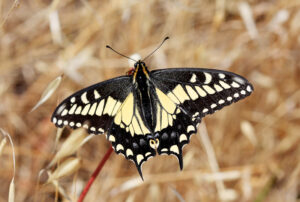
    Here is a hill-topping male Papilio zeliacon, or Anise swallowtail.  This butterfly is widespread in the western Pacific states and is probably much more common than it once was.  After the introduction of fennel (Foeniculum vulgare), and subsequent escape from horticulture, the anise swallowtail took hold as a common California butterfly.  Perhaps before this plant overtook…

  • The only bar in town

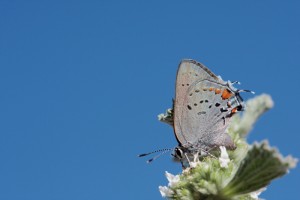
    In eastern Lassen county, on the vast high juniper hills of the California-Nevada border, there are herds of “wild” horses, sheep and cattle.  Par for the course, the only flowering plant around was horehound (Marrubium vulgare). Despite the non-native flora and (semi)mega-fauna, the insects were still at home.  Being the only nectar source, the small…

  • On the road again

    Over the next week and a half I’ll be driving up to Washington state for the annual Lepidopterists’ Society meeting.  It is located in the tourist-trap town of Leavenworth, which is a “Bavarian themed” diorama of postcard and clog shops.  While I can never quite understand the appeal of themed towns, it is something Americans just…

  • Genius of the Press VIII

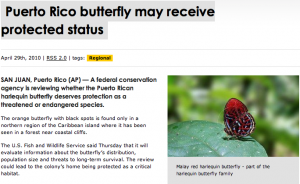
    Welcome to volume eight of the inconsistently reoccurring series, Genius of the Press.  I came across this article recently regarding an endemic Puerto Rican butterfly.  Who can tell me exactly why this report is misleading?  It may be a little trickier than the standard GOP (I suggest discarding any previously associated acronyms with those letters)….

  • Biology of a Ghost

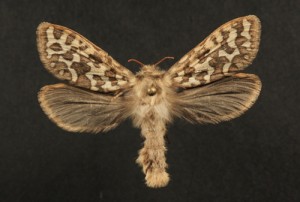
    This moth is just about as rare as its paranormal namesake (except that it’s real) – it’s a Gazoryctra sp. in the family Hepialidae.  They represent a basal lineage of the Lepidoptera and are commonly known as ghost moths or swift moths.  Ghost – because males of some species are known to fly in true…