Lepidoptera

  • Monday Moth

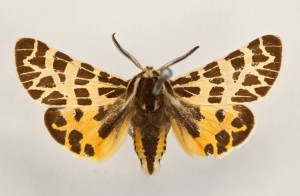
    I’ll keep the ball rolling with Arctiinae and post a photo today of Ctenucha brunnea.  This moth can be common in tall grasses along beaches from San Francisco to LA – although in recent decades the numbers of this moth have been declining with habitat destruction and the invasion of beach grass  (Ammophila arenaria).  But anywhere…
  • Curators Astounded!

    Well as you may have guessed the subject isn’t as shocking as my title suggests, but I couldn’t help but to spin from the Guardian article.  I really find it hilarious when I come across anything that says scientists are “astounded”, “baffled”, “shocked”, “puzzled”, – I guess that’s a topic for another time…  Nevertheless a…

  • Monday Moth

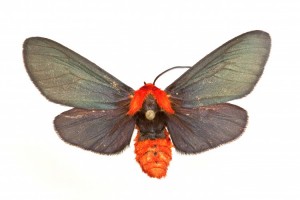
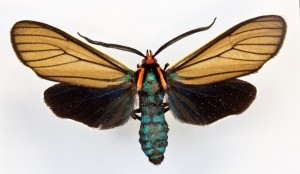
    Today’s moth is a beautiful and rare species from SE Arizona and Mexico: Lerina incarnata (Erebidae: Arctiinae).  Like many other day flying species it is brilliantly colored and quite likely aposematic.  After all, the host plant is a milkweed and the caterpillar is just as stunning (below).   This image of an old, spread specimen hardly…

  • Monday Moth

    I’m going to keep the ball rolling with this series and try to make it more regular.  I will also focus on highlighting a new species each week from the massive collections here at the California Academy of Sciences.  This should give me enough material for… at least a few hundred years. This week’s specimen…

  • Arizona followup

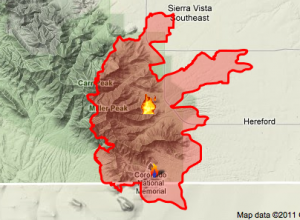
    Map/% updated June 20, 6pm. Updates to the maps and containment percentages have been made to my earlier post.  Here is a map of the 4th fire burning in SE Arizona, the Monument fire.  This one is only 10% 17% 15% 27% contained and is burning in the southern end of the Huachuca Mountains into Mexico….

  • Monday Moth

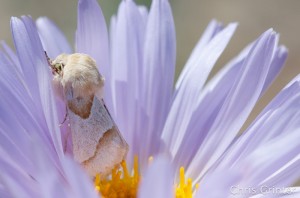
    Whoops, it’s almost Tuesday!  Above is Schinia ligeae (Noctuidae) resting on its host plant Xylorhiza tortifolia, the Mojave Aster.  I photographed this about three weeks ago outside the town of Big Pine, California.  The asters were thick in the valleys below the snow capped Sierra, and the moths were abundant.  Somehow these medium-sized Schinia get away with…

  • The Mission Blue Butterfly

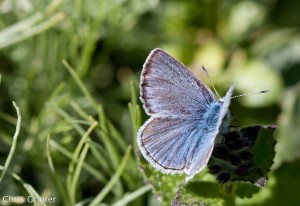
      Like so many other urban animals, the Mission Blue Butterfly (Plebejus icarioides missionensis) is one that is gravely imperiled.  This small blue lives in tiny fragments of habitat alongside multi-million dollar development in and around the San Francisco Bay.  A century ago this butterfly was already starting to decline, with hundreds of acres of beautiful…

  • Sunday Moth

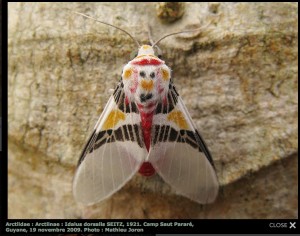
      Everyone is familiar with the famous death’s head hawkmoth, but I think it’s a shame we have popularized such a grim character.  Above is a much more cheery Neotropical Arctiinae from French Guiana that looks like it’s sporting a clown face.  Sadly this isn’t my photograph, but you should take a moment to explore…

  • The tiniest of moths

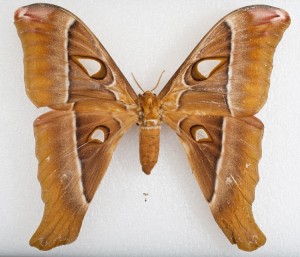
    The family Nepticulidae hold some of the smallest moths known, ranging from 3-8mm wing-tip to wing-tip.  For a comparison I have imaged two moths above: the largest known – Coscinocera hercules that tips the scales at nearly 9 inches, and one of the smallest (yes that tiny little speck below the Hercules moth) – Ectoedemia rubifoliella, also…