Entomology

  • |

    Stink Bug Stink

    CNN has now jumped on the bandwagon of FOX-esque bashing of scientific funding.  Reporter Erin Burnett “reports” on the federal funding of $5.7 million dollars to help fight the invasive Brown Marmorated Stink Bug (Halyomorpha halys).  Burnett’s sarcasm is nearly thick enough to break into SNL levels of ridiculousness, but she seems genuine in her distain for…
  • Monday Moth

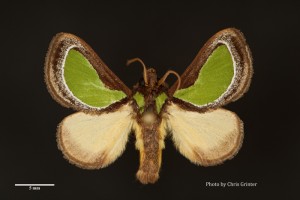
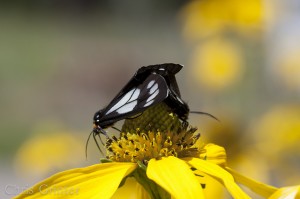
      This Monday moth is an Arctiinae, Gnophaela vermiculata.  These beautiful day flying moths were abundant on yellow Helianthus flowers around 9000′ in the Santa Fe National Forest, New Mexico.  Caterpillars feed on bluebells, but the adults prefer the highest quality nectar source in the area – which fortunately makes for easy and attractive photo subjects.

  • Sexy, Sexy Beer Bottles

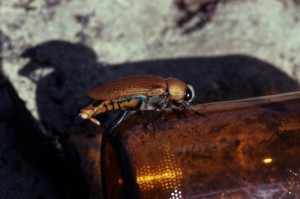
    The 2011 Ig Nobel ceremony took place yesterday at Harvard’s Sanders Theatre.  The award is sponsored by Improbable Research, an organization that gathers fascinating, odd, and outright hilarious research papers that triumph the idea that not all science is boring.  Among this year’s distinguished recipients was fellow entomologist and blogger David Rentz, who received the IgNobel in Biology for…

  • The Soaring Microcosmos

    [youtube kZyIN23Cy4Y 480 360] The microscopic insect world is a very different one from ours and we rarely are given glimpses into it.  Thanks in part to the impressive Phantom camera system and the Flight Artists project researchers have filmed the minute (1mm!) Trichogramma wasp (Chalcidoidea) in flight.  These insects are egg parasites of Lepidoptera (amongst…

  • Monday Moth

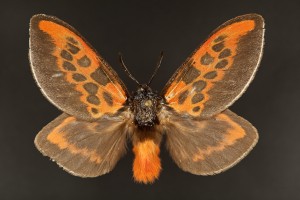
      This Monday moth is a stunning female of the Neotropical Megalopygidae – Trosia nigrorufa.  Ed Ross and Ev Schlinger collected this specimen in Peru in 1955, and I’ve heard many stories about these epic expeditions.  I can’t really imagine travelling via cargo ship, being gone for six or more months at a time and relying…

  • Monday Moth

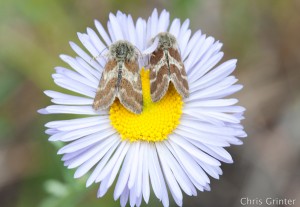
      This Monday’s moth is a duo of Schinia villosa (Noctuidae) resting on what I am assuming is their host plant (Erigeron sp.).  I snapped this shot around 9,000 feet up on the Kaibab plateau in Northern Arizona last month.  A fire must have burned the area a few years ago because the wildflowers were thick amongst…