Genius of the Press VII
Who can see what’s wrong with this article?

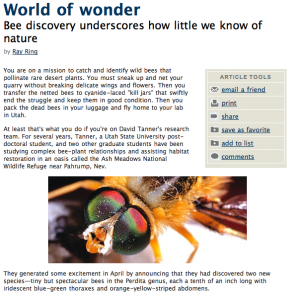
Who can see what’s wrong with this article?
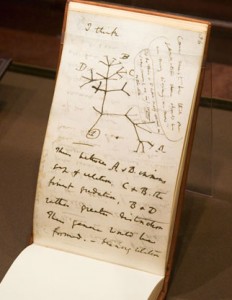
This recent article in the American Naturalist has taken a second look at some of the famously inflated species estimates, some going high as 100 million (Erwin, 1988). Estimates conducted by the authors indicate that projections above 30 million have probabilities of <0.00001. Their estimated range is more likely to be between 2.5 and 3.7 million…
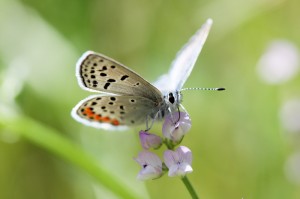
Just a few images of common California leps, taken along the coast range near Santa Cruz a few weeks ago. Starting to work my way through some photo backlog… Euphydryas chalcedona Plebejus acmon Plebejus acmon Ethmia arctostaphylella on Eriodictyon sp. One interesting note on Ethmia arctostaphylella – the name is a misnomer, it does not…
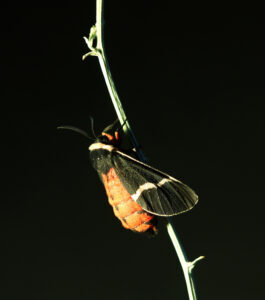
For the rarely reoccurring quiz series, here is a new image. Who is this moth?
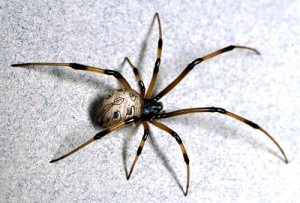
For those Californians reading, especially those in the south, keep an eye out for this beautiful little spider, Latrodectus geometricus – the brown widow. Arachnologists at UC Riverside are monitoring the spread of this invasive species. Ironically it turns out to not be as dangerous as our native black widow. Nonetheless, it is not from…
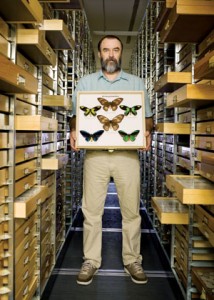
It’s good to throw a changeup every one in a while, and this week here is an article that is actually GOOD. Yes, you read it here first, a positive article about entomology collections. We all need a breather after that Fox news fiasco with the Michigan State collection. The Honolulu Magazine does a really great…
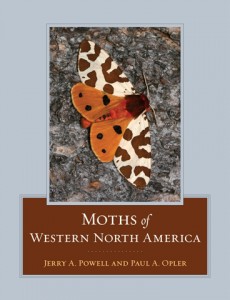
For those who are not aware, a new book hit the market at the end of last year. “The Moths of Western North America“, Powell and Opler. At only $95 it’s worth every cent (or $75 for the e-book, but I hate e-books). It’s a remarkable tome and the first of its kind for the…
From a peppermint Pericopinae. I recorded this video on-site in northern Costa Rica a few years ago. When I reached down to pick up this moth, it was hard to avoid noticing the behavior. The moth, Chetone angulosa (Erebidae: Pericopina) ((used to be Arctiidae)), has a common defensive mechanism for this group – they excrete…
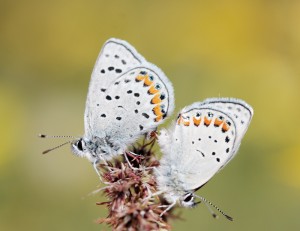
For the last four weekends now I have been on a goose chase, for one moth, Heliolonche celeris. It’s a beautiful small Noctuidae with pinkish forewings and stunning orange-red hindwings. It isn’t very often encountered and only found along the northern California mountain ranges feeding on Malacothrix floccifera – a CA endemic flower. Every trip I have…
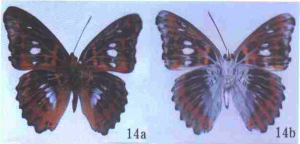
Recently came across some ridiculously horrible taxonomy from China (.pdf). If you scroll down a bit you can see the english translation. At first glance this looks like a standard taxonomy paper with bare-bones species descriptions. You might even think to yourself, “huh, wonder why they are describing species from only one specimen”. Not the…