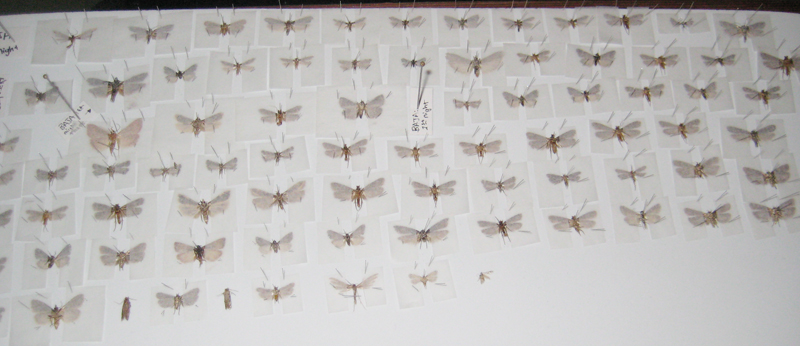
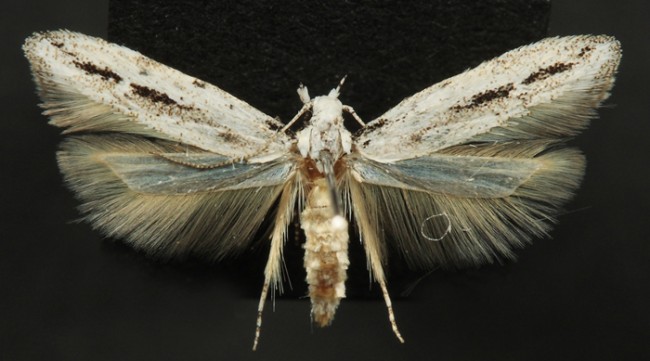
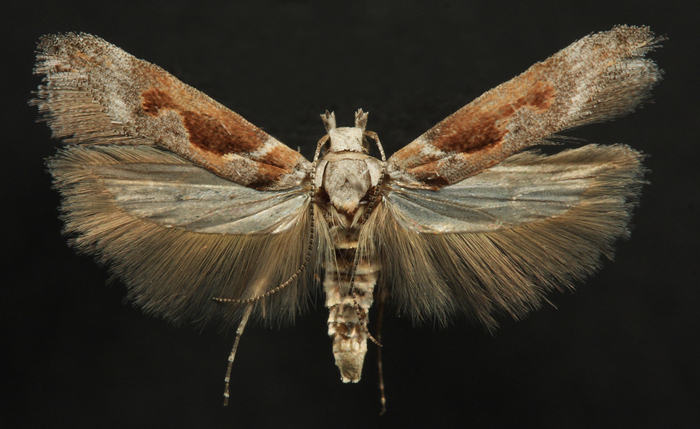
Here is how I spread microlepidoptera, which you will quickly notice is not a standard method. I usually get puzzled looks or puffs of air from other micro-guys, but the quality of my specimens speaks for themselves. This method was originally taught to me by Terry Harrison, the creator of Microleps.org. For the more standard method see here (.pdf).
Firstly, I am calling everything smaller than ~20mm a “micro”, this has no taxonomic or phylogenetic bearing – literally just a small moth. I tend to pin everything from the size of a Nepticulidae to even a tiny Noctuidae on minuten pins. For the vast majority of leps a size of .20 will be sufficient. I reserve the ridiculously needle fine .10 pins for the tiniest of tiny moths; those smallest pins tend to also be difficult to find for sale. Small Noctuids (such as some Acontiinae and Arctiinae – Cisthene and Crambidia) are typically pinned on small gauge standard pins – between #000-#1. I have really come to dislike using pins smaller than #1 because of how flexible they are. Handling a moth on a #000 pin is ridiculous and adding a label is a nerve-racking feat. A double mounted moth with a #3 pin is easy to transfer and label; no bent pins and no “flicks” that vaporize your specimen. Some delicate bodied moths will still occasionally warrant a standard size pin… but double mounting a lep should always be the preferred method (at least in my book).
Here is my basic toolbox for microleps.
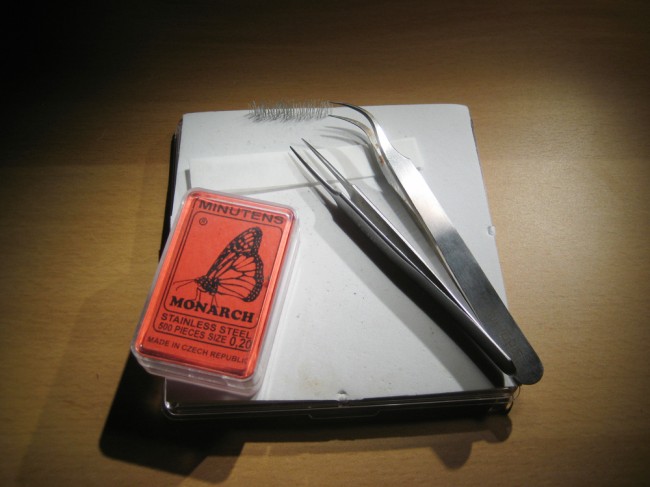
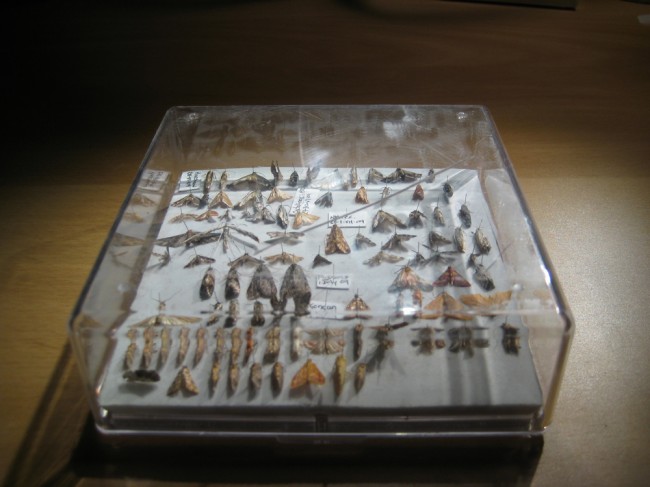

The plastic boxes are also from BioQuip, however you need to line them with foam. The highest-density foam you can find should be used. I picked up a few small sheets of a gel-foam overseas and haven’t taken the time to find it here in the US. It is twice as dense as plastazote and has a smoother surface. “Cross-linked polyethelene” seems to be a good match. It does however hold a pin hole and will need to be replaced within a few years.
My process:
- Pin your moth fresh in the field using minutens just as you would for any other lepidoptera. While my eyes can manage this without magnification to date, it won’t be long before I need something like this. You can pin the moth dorsally or ventrally (the moth is upside down and you insert the sharpened pin tip between the two forelegs). This makes no difference with a double mount since even the unsharpened end is fine enough for pinning into foam.
- Relax your moths using my method described here. Absolutely no ethanol should be used in the chamber, the smallest amount will fail to perfectly relax a micro. Most micros can be relaxed and spread with little problem, and it takes only 6-12 hours to achieve this. However, delicate and very small moths may never create good specimens if they are not fresh. If you are at all able, collect the smallest moths alive in vials, and reserve for the next day to spread. Glass vials are preferable because the static charge that can build in plastic may cause a moth to cling and rub scales. Dispatch of the moth in your freezer or with a tiny drop of acetate and proceed.
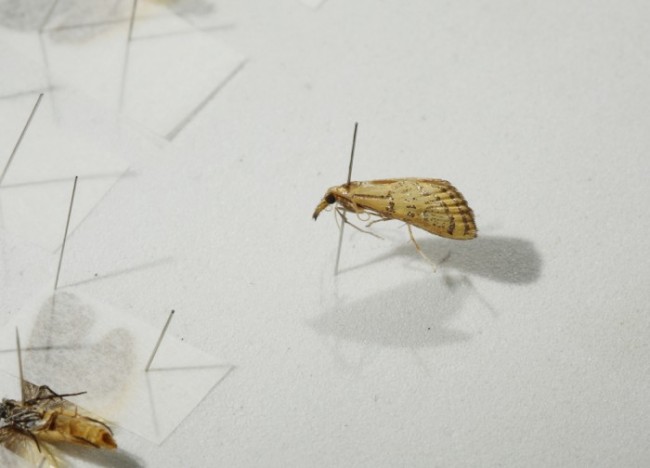
- Gently puff on your moth from below to loosen the wings or manipulate them forward with a pin. This is a good time to point out that sometimes spreading is not worth the risk and a “blown” open specimen such as the one below is best. If you have a solitary specimen of a tiny and delicate moth you should puff or move the wings forward and allow the static of the foam to hold them into place. This allows for a decent view of the hindwing without risking slight damage that might be caused during the mounting process.
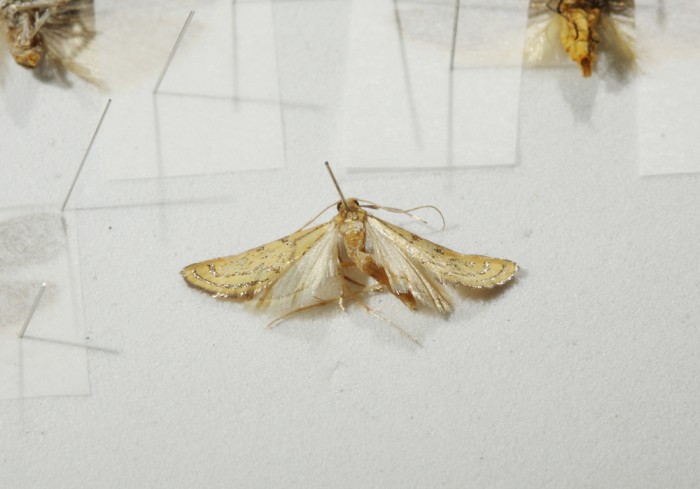
- Flip the moth upside down and position as evenly and as flush as possible to the foam. You can use larger sheets of the foam for your spreading – the clear boxes are best for field use only (especially because they start to get dirty).
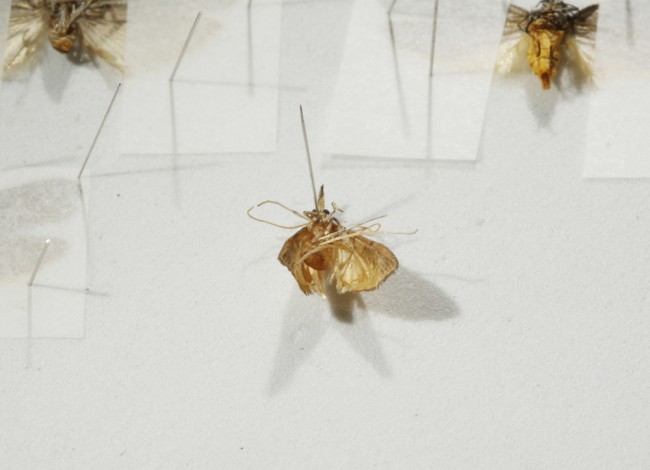
- Pin down the wings using small strips of tracing paper, just as you would on a spreading board.
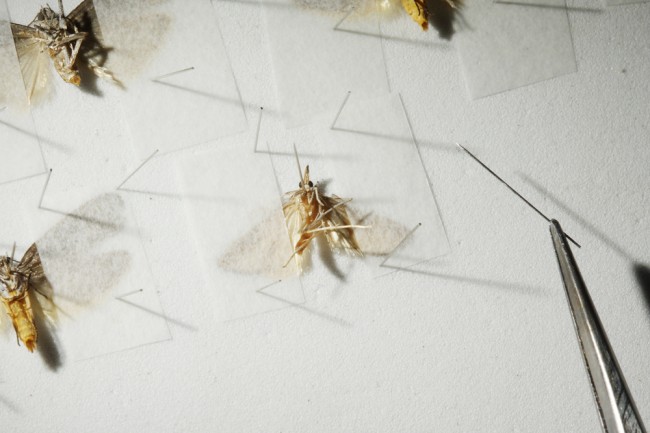
- Using a minuten pin gripped tightly between your forceps, tease the wings into the desired position. The costa of the forewing will provide a small curled ridge that very easily facilitates moving the wing without adding any holes. If you are lucky the wings will remain coupled and no adjustment of the hindwing will be required. Once in place hold the paper down with your finger and pin it into place.
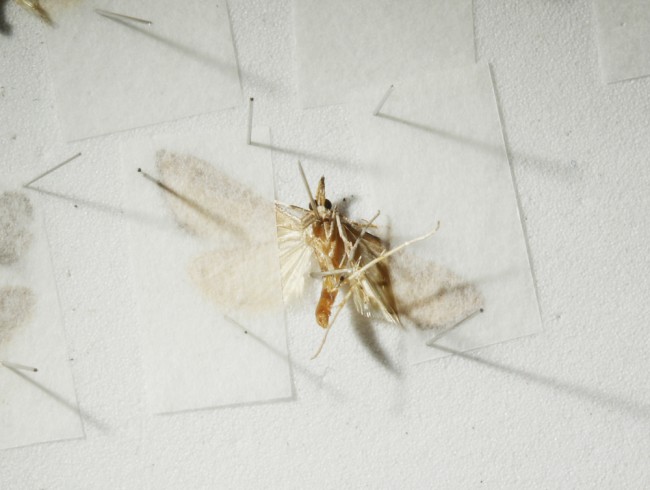
- The moth will only take a few days to dry. Just as any other technique this takes lots of practice and may not be desirable for some. With practice you can spread a micro faster than a macro – and end up with far superior specimens. However, some people may prefer cutting tiny grooves into the foam and spreading traditionally to avoid any rubbing that occurs with an upside-down lep. A skilled mount will lose almost zero scales – nothing more than what would happen normally – and it avoids putting holes in the wing.
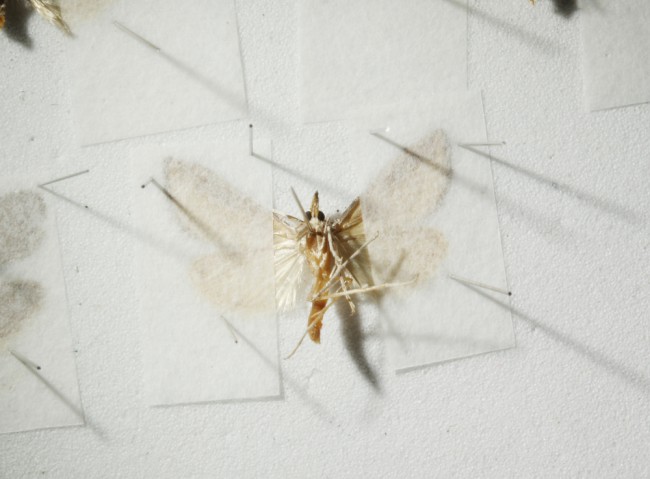
The results!