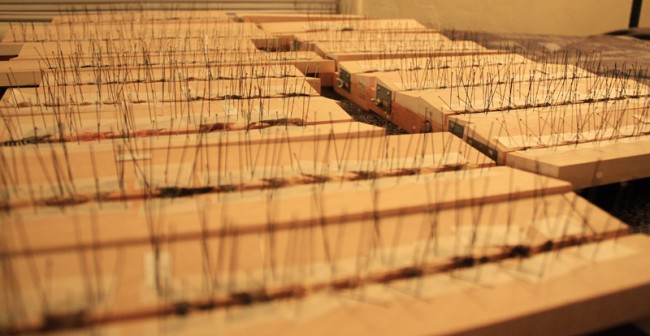
Here is my method for relaxing Lepidoptera. Just like everything else, it seems like everyone has their own system and procedure. Mine might not be best for every situation, but it is designed for pinned specimens in bulk. I get through a few thousand leps a year, but it can be easily scaled to meet your needs.
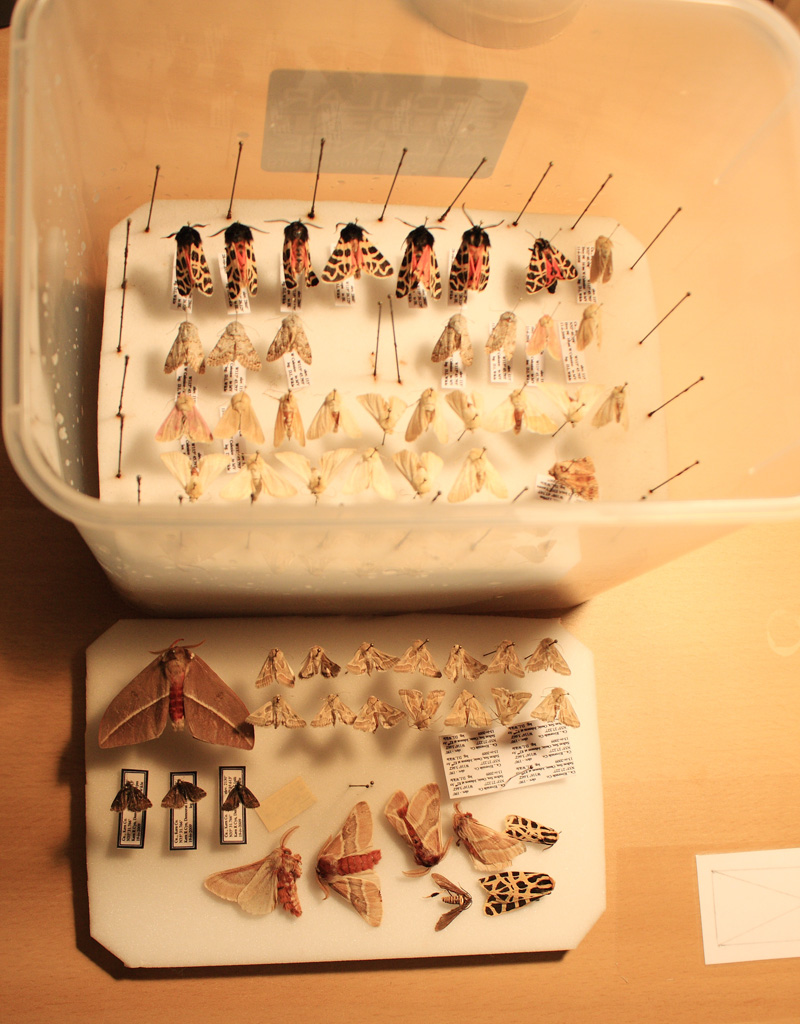
- I use one of these medium-large snap-top Tupperware containers that you can find in any market. The dimensions are roughly 8″x5.5″x7″. Any well-sealing container can be used.
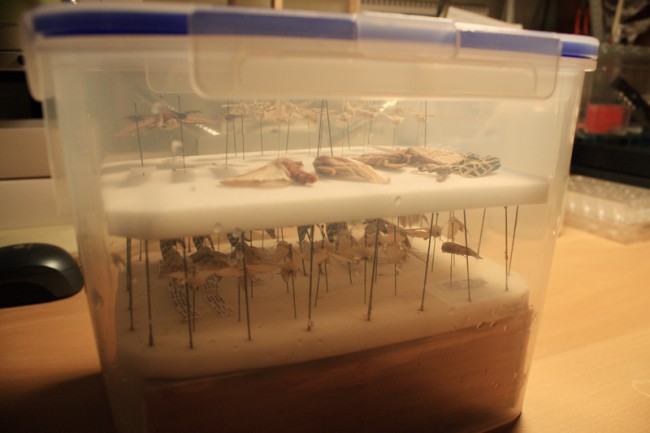 I create a support frame by cutting the bottom off of and then out of a smaller Tupperware container – essentially a rectangular plastic support (the frame in the image is wood, which was my old method). This keeps the bottom pinning surface out of the water, which means it’s very easy to lift out. Placing the foam directly onto water causes a slight adhesion that makes removal difficult, especially without dripping or splashing. Within the frame I stuff paper towels for absorbance.
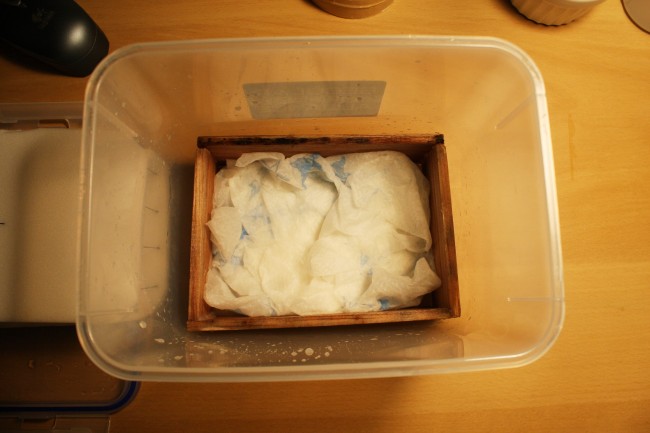 Add enough tap water to moisten the towels but be careful not to allow for standing water. This is just a precaution to avoid splashing, especially if the container is bumped or knocked over. Recently I’ve been using deionized water, which seems to work faster than tap water; and I avoid using hot water because the excess steam creates too much condensation that can drip onto the specimens. My theory is the slower the better, no reason to rush good specimens! But if I am ever in a rush I will add warm water or gently heat the relaxer making sure to leave the top layer empty as a drip-guard. When using hot water be sure to insulate the top of your container to help resist condensation. But, heat can create excess greasing in some species, so this should be avoided unless absolutely necessary!
- I cut foam pinning trays to fit. Using #7 pins (stainless would be best) I create a perimeter on top of which multiple layers of trays can be placed within one container; the middle two pins are placed as a pull. The bottom layer can not accommodate large specimens with wings folded dorsally, but they can either fit in the top layer or when only one layer is being utilized.
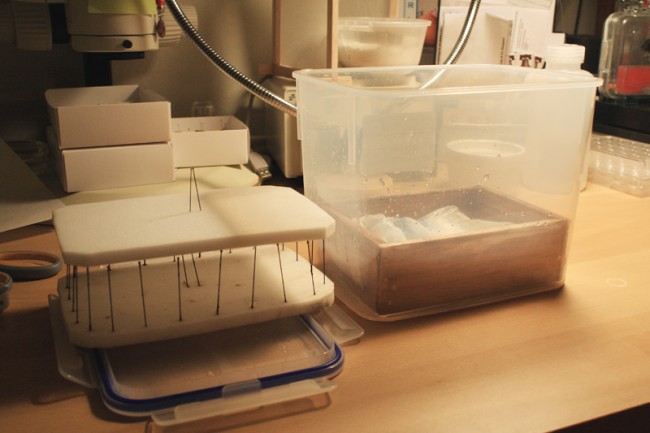
- I then load specimens and place into the relaxer. For papered specimens I simply place them flat onto the foam, but it is inefficient space-wise. It usually takes 6-8 hours for microleps to be relaxed, 1 day for small or delicate leps like slender Noctuids or Geometridae and 2-3 days for the majority of Noctuidae and even Saturniidae. Sphingidae seem to usually take 4-5 days, and stubborn ones I inject with a small amount of water to facilitate relaxing. I can typically spread the contents of one relaxer in 4-5 hours (sometimes spread over 2 nights) and since I only have 20 spreading boards I never have had the need for constructing a second relaxing chamber.
- I do NOT add any chemical mold repellant such as chlorocresol, naphthalene or PDB. I used PDB for a few years but the vapors are extreme, especially when working at your desk for hours. Instead I carefully wash all surfaces with 95% Ethanol for sterilization after each use (boiling water might be substituted). I allow for only a minute ethanol residue because excess alcohol inhibits proper relaxing and you end up with crispy wing-joints, even after a week. While this method prevents mold for 5-6 days it is not fool-proof. I have forgotten about specimens and within 7-8 days some light mold will begin. Despite this, I find this method creates the most satisfactorily relaxed specimens out of anything I’ve tried.
The results!