California Academy of Sciences

  • Monday Moth

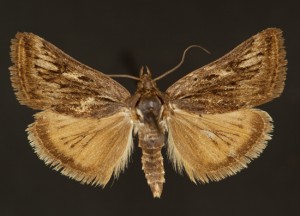
    Today’s moth is an understated brown Crambidae, Loxostege brunneitincta.  While this isn’t a particularly captivating moth it does have an interesting story that illustrates the need for scientific collections and museum loans.  If you read the label image you will notice the moth was originally collected in 1927 by E. P. Van Duzee in Truckee,…
  • Back to Blogging!

    As I’m sure you’ve noticed things have been awfully quiet around here for the last two months.  Most of January I was busy with a move, from San Francisco to Chicago.  Unfortunately the foundation that was supporting my work at the California Academy of Sciences had some tough financial calls to make and my position…

  • Monday Moth

      This Monday moth is a stunning female of the Neotropical Megalopygidae – Trosia nigrorufa.  Ed Ross and Ev Schlinger collected this specimen in Peru in 1955, and I’ve heard many stories about these epic expeditions.  I can’t really imagine travelling via cargo ship, being gone for six or more months at a time and relying…

  • Monday Moth

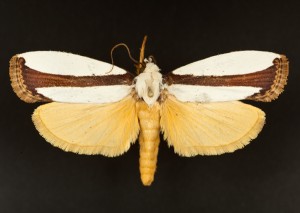
    Last week Jim Hayden guessed the moth I posted was an Australian Oecophoridae.  It was a good guess because there are so many large and stunning moths in this family from Australia.  One of the best has to be this one, Wingia lambertella (Oecophoridae), captured on Black Mountain in Canberra October 23, 1955 (CAS collections).  The…

  • Monday Moth

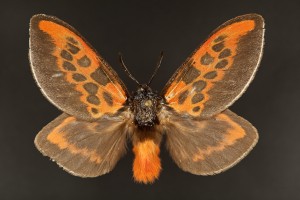
    ANSWER:  This wasn’t easy – but this large and beautiful moth was from Australia and is in the family Xyloryctidae (Philarista sp.).  We have a handful of representatives of this group here in the US and Ted MacRae over on Beetles in the Bush has a few great photographs of them.  Somehow I think we got the…

  • Monday Moth

    I’ll keep the ball rolling with Arctiinae and post a photo today of Ctenucha brunnea.  This moth can be common in tall grasses along beaches from San Francisco to LA – although in recent decades the numbers of this moth have been declining with habitat destruction and the invasion of beach grass  (Ammophila arenaria).  But anywhere…

  • Monday Moth

    I’m going to keep the ball rolling with this series and try to make it more regular.  I will also focus on highlighting a new species each week from the massive collections here at the California Academy of Sciences.  This should give me enough material for… at least a few hundred years. This week’s specimen…