
Last update: February 2026
I am often asked for tips on collecting localities and more-so about whether or not a permit is required. I have broken down the rules for the US here, and started to add other countries as I dig up the details. All of this information will pertain to noncommercial (scientific) use only. Please comment if you notice any inaccuracies or have any additions or suggestions. I am attempting to consolidate this information, not provide an infallible resource. Do not rely solely on my advice because this information is subject to change, you should always call ahead and make contacts in that country before you swing a net.
Acquiring permission to legally collect is critical and should not be ignored. If you are building a collection in hopes of donating it to a museum one day, this is a detail you can not avoid. Most institutions require evidence that all of your specimens were obtained legally. Illegal collecting will also eventually put you on the radar of the USFWS and may result in fines, confiscations and possibly jail time if you really flaunt the law. Illegal (or sometimes even legal!) collecting in other countries can easily land you in jail – we have all heard the horror stories.
USA: Here is a list of federally protected species. Many states also have additional state protected species that are illegal to collect. I have not been able to find a comprehensive list, but each state’s wildlife department will have a list which you should check before collecting.
- Private Land: Permission granted by landowner.
- Public Lands/BLM: Permit usually not required. Most BLM property is governed by the Wilderness Act of 1964 which (with recent updates) has separated scientific from “casual” non-commercial collecting. Under Section 6302.15 “You may remove or disturb natural resources for non-commercial purposes in wilderness areas”. So, collecting is permitted as long as it remains non-commercial, maintains the wilderness environment and is not previously restricted. Insects are never mentioned but the regulation is vague. Areas designated as “Special Areas”, such as National Monuments, Research Natural Areas or Wilderness usually do require permits. It seems like there is a lot of leeway given to whomever is interpreting the law at the moment. If you are unsure, contact the local BLM (Bureau of Land Management) office and ask.
- National Forests: No permit required for recreational collecting. All forests and grasslands are completely free range for collectors. Keep in mind that rangers still do have the authority to close an area and ask you to leave, but this has never been my experience. You should always call ahead and ask if you are unfamiliar with the area. I also always carry a copy of the NFS letter to collectors just in case, download the new 2011 letter to collectors, and the original USFWS Collecting Letter here (.pdf). Wilderness areas within forests are often closed to collecting, but ask ahead. One strange rule that the NFS does have is that all scientific collecting requires a permit. I assume they want to know about official research being conducted in their parks, but this line can be really fuzzy in my opinion. I have gone on recreational collecting trips and discovered something that ends up in a publication. Since the majority of my collecting is personally funded, I go ahead and assume it is recreational.
- State Parks: Permit required in most states. The only current exceptions that I know of are listed below. Some states will allow recreational collecting at the discretion of the park ranger, and you just have to call ahead and ask or show up with cookies. More often than not a permit will be required. This process hasn’t been too difficult in my experiences in IL or CA, and there are no wacky rules about specimen ownership and getting state-wide access is possible. Having an institutional affiliation may be very helpful, but not required (each state is different I’m sure). Applying for state permits has been a fast process in my experience, usually taking only a few weeks for approval.
- Nature Preserves: Permit required. Many states have designated nature preserves or reserves and they are often governed by a separate entity from state parks. The Nature Preserve Commission in Illinois requires a separate permit for every site you want to work in. It also takes them 60-90+ days for approval, plan ahead accordingly!
- National Wildlife Refuge: Permit required. All refuges are strictly off-limits without a permit, and rules regulating your impact while on the refuge are strict. Having a specific research target and institutional affiliation is required, along with detailed reports and specific institutions for deposition of specimens. Any specimens collected on a NWR will remain property of the reserve system for perpetuity, and any future research on these specimens must be accompanied by written approval by the refuge. That being said, more often than not those details are a technicality and not strictly enforced. Every experience I have had with a NWR has been a great one; they are always run by well-educated biologists who understand the nature of research and are eager to learn about your discoveries. They also tend to turn around a permit very quickly, I have never waited more than a week for approval.
- National Parks: Permit required. Obtaining a permit for a park is extremely difficult and time-consuming. Having never done it myself I do not know the full details, but there are many similarities to wildlife refuges. In the case of a NP absolutely all specimens have to be deposited into an institution and identified by a unique reference code. The NPS retains ownership and the right to call-back specimens if needed. There are also long lists of rules that must be followed while within the park, including staying out of sight of tourists. Permit approval can take many months if you are lucky. Really does not seem worth the hassle.
- National Monuments and Recreation Areas: Permit required. Usually governed by the National Park Service and therefore obtaining a permit is difficult and mired in bureaucratic red tape. However, some monuments are operated by the National Forest Service, BLM or other state agency – which means they are semi-autonomous and much more efficient. Call ahead and ask, each one is different.
- Land Trusts/Private Reserves: There are countless private land trusts that act as independent preserves and all have their own process for permits. The Nature Conservancy and Audubon Society are a few larger ones – but local communities and private foundations can even have their own. While they are not governed by state agencies they are usually very cooperative and easy to work with regarding research permits. Some trusts may require a state collecting permit before applying for theirs.
California: As of 1 October 2018 terrestrial invertebrates have been excluded from California Department of Fish and Wildlife scientific collecting permit. There are exceptions for protected or threatened species that are specifically listed, or aquatic species (especially vernal pools), check the CDFW website for further details.
Colorado: Insects are not regulated wildlife and therefore no permits exist for state parks. However, each state park considers collecting a “special use” activity and a day-permit is required. They are easy to get and often don’t take more than 5 minutes to fill out.
Michigan: Permits are not required for state parks (thank you HDK below).
Oklahoma: Permits are required for state parks. Up until 2014 permits had not been required.
Wyoming: Casual collecting possible with permission. Alan Silverstein in a comment below has stated he has had lots of luck with just asking for permission on-site.
Collecting abroad requires a lot of planning in advance. I recommend collaborating with or even hiring someone (like a graduate student) in your destination country to file permit paperwork for you. A person who can go to the regional office on your behalf, speak the language, and iron out any problems ahead of time could help ensure your trip is a success.
ALBANIA: Permits are not required outside of protected areas, but there are protected species. Commercial collecting is specifically illegal.
ANGUILLA: Department of the Environment grants permits, information here.
ANTIGUA & BARBUDA: Contact the Forestry Department: forestryunitab@gmail.com.
ARGENTINA: A collection permission is needed from each Province you want to collect in, as they hold the rights to their genetic resources. Most of the time you have to inform them about: species, location, date, number of specimens to be collected, all fieldworkers and your association to a scientific institute. Sometimes you are required to have a locla partner. In some provinces, you have to pay for permits. They will also provide you with an export permission from their side. Getting into contact is not always easy, the best is to call the listed institutions and ask them where to specifically send your application. You need a translator or speak Spanish, as most officials do not speak English and all documents are in Spanish. An overview with links to the Province-laws can be found here (scroll to the very bottom, download the second PDF, you get a list of all provinces and PDFs of the respective Resolutións).
Here you can find information on how to hand in your Province-permissions to the central government via a special system (TAD) to receive a Certificado de Cumplimiento. If you have questions concerning the TAD-system it is best to write to: protocolodenagoya@ambiente.gob.ar (in Spanish!)They are very helpful. A application can be processed within 1-2 month by the province and 1 month by the central government. Provided you hand in all the needed paperwork. In my experience, it is better to plan with far more time, especially if you are not fluent in Spanish. You might need to get an apostille (notarization of your signature which is legal in Argentina) at the embassy for certain documents.
ARUBA: The Veterinary Service of Aruba handles permits (vetservice@despa.gov.aw).
AUSTRALIA: Complex permits required. See this page from the ANIC on requirements. Even with a permit, it’s possible that only a few representatives of each species you collect may leave the country.
AUSTRIA: Permits generally not required for non-protected species on private land (with permission of course), public lands outside of Parks and protected areas “Naturschutzgebiete”. Permits are required for automated trapping methods (malaise, UV). Permits are granted regionally and may be difficult depending on the local bureaucracy.
BAHAMAS: Current moratorium on all research and collection permits for 2019. Bahamas is re-writing permit legislation following the NAGOYA protocol. All permits need to go through the Bahamas Environment, Science and Technology Commission (BEST). See this page for more information.
BARBADOS: The Natural Heritage Department is in charge of collecting permits: heritage@barbados.gov.bb.
BELGIUM: Illegal to collect any federally listed species. Private land: no permits needed. Nature Reserves: permission often granted if you are collecting less well-known species. If you promise a list of everything you collect and avoid things like butterflies then you will probably be granted permission. Several of the large forests in the south will allow some day collecting but night access is restricted without permission. Ask nicely and promise a list of species collected. Here are links for permits in Flanders (North) and Wallonia (South).
BELIZE: Permits required for insect collecting and can take approximately 3+ months to process and cost $100USD. If you are requesting to work in any conservation area, you must provide detailed contact information for your collaborators – they will be contacted (once), and if they don’t respond, your application does not move forward. Expect to call regularly to check on your permit, and plan on spending a day in Belmopan to finalize the permit (or arrange to have a local collaborator take care of last minute details and payment). Application for permits can be found here.
BOLIVIA: Apparently Bolivia has made it very difficult to conduct research within the last few years. The permitting process is very slow and can take 6 months or more, with no guarantee that the paperwork will come through in time. Additionally, submission of the export permit requires approval that usually requires that all of your insects be shipped out of the country after you depart. The export permit also requires all specimens to be identified to SPECIES, even if it’s Papilio sp. A, B, C… etc. An expedition by a large US Museum in 2007 ended with all collected specimens being left in Bolivia awaiting export permits. As of 2010, the specimens are still awaiting approval for shipment. But perhaps you could have better luck, try contacting the Museuo de Historia Natural.
BRAZIL: Forget it. OK – it is possible to obtain research permits for this notoriously difficult country. Although fairly difficult to achieve, Brazilian researchers who are in possession of IBAMA permits may be able to include foreign researchers on their permit to cover specific collaborative research projects that involve collecting and export of specimens. Expect to work closely with potential collaborators during the application process, and plan on at least 9 months (or more) to move the many forms though many government offices. Often it is only possible to get your specimens by leaving them with your Brazilian colleague and having them shipped to you as a loan. Recent updates to the Brazilian law make it even harder to collect (Science letters, 2014 .pdf).
BRITISH VIRGIN ISLANDS: Department of Environment & Fisheries for permits.
BULGARIA: Collecting allowed outside protected areas for non-protected species. Commercial collecting is illegal. A list of protected species can be found here.
CAMBODIA: Collecting permits required, make contacts with the Cambodian Entomology Initiative for further information.
CANADA: Much like the USA, Canada limits collecting in Nature preserves, Federal, Regional and Provincial parks to permit only. Provincial forests should be open to collecting like the US National Forests. Exporting specimens may require that collected specimens are not on the protected species lists.
CARIBBEAN ISLANDS: The Caribbean Research Resources website was helpful, now defunct.
CAYMAN ISLANDS: Contact the Department of Environment for permits (Dr. Mat Cottam mat.cottam@gov.ky) and the National Trust for help setting up your research (Paul Watler pwatler@nationaltrust.org.ky).
CHINA: Permits are required and only granted if you have Chinese collaborators, which are often required to accompany you in the field.
COLOMBIA: Sounds like they are making permits all but impossible to obtain with contracts needed and fees reaching nearly $10,000. This article discusses this new legislation that went into effect 28 December 2011.
COSTA RICA: Permits required. Costa Rica is a very environmentally conscious country and is very vigilant about its biological treasures. Because much of Latin America relies on hand-checked luggage your boxes of insects stand a high chance of being discovered, so do not risk it. Their rules are strict enough that they even confiscate tourist’s seashells. If you have a research project and institutional affiliation than obtaining a permit is easy. Plan your destinations ahead of time and figure out what provinces you will be focusing on. All permits are granted through the Ministerio de Ambiente, Energia y Telecomunicaciones (MINAET) in San Jose. A standard project proposal, CV and basic information form is required for submission. Once approved you are issued the paperwork on site when you arrive along with a “collecting passport”, which is literally a passport like book with your image that grants you access to your approved areas. In country you are required to pay a $35 fee into the account of the park service at Banco Nacional. The guy who issues you the permits will also help you fill out the export permit before you leave the country (pretty standard, list things as best you can to family if possible). All in all, a very well oiled system that operates very efficiently.
CROATIA: Collecting is banned but it is possible to get permit from The Croatian Natural History Museum (Hrvatski prirodoslovni muzej). (according to Zdenek in the comments)
CUBA: Travel to Cuba for US Citizens is restricted but IS permitted for professionals conducting research. Recent changes in enforcement by the Obama administration make travel to Cuba for research much easier. Permits to travel there can be obtained via the Department of Treasure and this website. As far as collecting permits you should find a local scientist and contact them (and then bring me with you).
CYPRUS: Collecting permits are required per 2003 wildlife legislation. See this page from Cyprus Butterflies for more information.
CZECH REPUBLIC: No permits required for non-protected lands or protected species (as per Natura-2000 + a few others). Permits are issued by Departments for Environment, Agriculture and Forestry under Regional Bureaus (Krajsky urad, Odbor zivotniho prostredi, zemedelstvi a lesnictvi), if you need to collect in protected areas, you should ask relevant Nature Conservation Agency (http://www.nature.cz). (thanks to commenter Zdenek)!
DENMARK: Collecting allowed outside of protected areas.
DOMINICA: Permits issued through the Forestry and Wildlife Division. forestry@cwdom.dm
DOMINICAN REPUBLIC: Collecting allowed only for scientific or educational purposes, permit required. There are standard application procedures, similar to Costa Rica. This is the page with application for research (PDF) in protected areas. Export permits are also required as per this page – but a specific “export” permit is not linked. This is the “import” paperwork, which may be the same. Permits can take a few months to obtain and you have to allow time before and after your trip to pick up the collecting and export paperwork in Santo Domingo.
ECUADOR: Another tricky Latin American country to collect. Permits are all issued through the Ministerio del Ambiente and can be written by the National Museum or Catolica University. Country-wide permits are issued, however to obtain an export permit separate “permiso de movilizacion” clearances are needed for each province you collect in. Contact the Museo Ecuatoriano de Ciencias Naturales or Universidad Catolica and it is likely that an Ecuadorian will have to collaborate with you and possibly join you in the field. Ecuador has large problems with drug smuggling and they are preoccupied with more serious crimes than insect collecting, so once a permit is obtained, you will not be hassled. A more detailed account of Ecuadorian permit issues here.
ESTONIA: Similar to other northern European countries, no restrictions on public land, and also private land if the landowner has no objections. Collecting in nature reserves needs a permit from the local administration and the only protected butterfly species is Parnassius mnemosyne. (thanks Kaarel in the comments below!)
ETHIOPIA: Permits may exist but it is very likely an expensive process to obtain. Like many African countries the bureaucracy simply doesn’t function well enough to effectively permit collecting.
EUROPEAN UNION (in general): A number of species are protected across the EU per the habitats directive found here (.pdf).
FIJI: Permit is only required for collecting on the national preserves, but most of the island is privately owned and landowner permission is needed. Export permit is required to leave the country and your insects must be inspected at a local biosecurity office before the permit is issued (one at the airport in Nadi). They briefly check to make sure everything is dead and there is no plant or soil contamination. There are also no legally protected species. (Information directly from the Fijian Dept. of Environment, relayed through Hollie’s comment below, thanks!)
FINLAND:Collecting permits only required for protected species and nature reserves (Plenty of protected areas are not marked). Collecting with traps is prohibited on the Åland Islands. Export permits required. Make a contact at the Finnish Museum of Natural History or University of Helsinki and that person could help guide you through any permits required (permits issued through “ELY centers). Access to most private lands is not highly restricted, limited camping is permitted out of sight of homes – but permission is always good to obtain, especially when collecting. (See comment below from Juha & Jyrki).
FRANCE: No permits required, except within National Parks. France is very collector friendly, but as in many countries there are protected species to carefully avoid. (Thanks to Opequin for this info).
FRENCH GUIANA: Non-scientific collecting is now regulated as of 2019. There are strict limits on two species: Theraphosa blondi and Titanus giganteus at 1 each per person per year. General insects above 1cm are limited to 1,000 specimens per person per year. Specimens under 1cm are not restricted in quantity. You also must register your trip and report specimens for export. Violations of the new legislation can lead to a fine up to $832 per specimen. There are at least many collecting friendly tourist lodges that regularly host entomologists. Updated regulations here.
FRENCH POLYNESIA: Research permits required, but may be easy to obtain.
GERMANY: Collecting of all kinds is prohibited throughout the country without permit (except for seasonal harvests like mushrooms). Permits can be applied for by private or public entities, professional, or amateur. Permits need to be applied for at the regional level and differs between regions. Check the protected species list here.
GHANA: Collecting permit and export permit required, probably difficult to obtain.
GREECE: Generally collecting is allowed, but export for hobbyists is impossible. Permission granted by Ministry of Environment and a list of the species you are collecting along with dates and places are required.
GRENADA: Ministry of Agriculture, Forestry and Fishes will issue permits. Contact Aden Forteau: michael_forteau@yahoo.co.uk.
GUADELOUPE: Contact the Direction Départementale de lʼEnvironnement de la Guadeloupe (DIREN Guadeloupe). Two permits are needed – collecting and export.
HONG KONG: Rules are harmonized with those of China.
HUNGARY: Permits required for collecting on National Parks, Landscape Conservation Areas and simple Protected Natural Areas. Permits cost about 70 Euro. However, collecting outside of those areas is unregulated except for protected species (mainly butterflies), found here: PDF. (Thank you Koy Tóbiás)
INDIA: Forget it.
INDONESIA: Permits required and difficult to obtain. Permits go by the acronym “LIPI” are issued by the Indonesian Institute of Sciences, but they have a great website for this entire process. I believe there is a strict quota per species, regardless of CITES status.
ISRAEL: Permit is required for collecting in nature reserves and national parks, or when collecting legally protected species (there are currently 14 species of protected butterflies, and several additional insect species being considered for legal protection). In privately owned lands, landowner permission is needed. Permits are issued by Israel Nature and Parks Authority (NPA), however their website is not exactly scientist-friendly, with most forms written in the Hebrew language. Contact the Supervision and Enforcement Division u.achifa@npa.org.il, or the Science and Conservation Division u.mada@npa.org.il for details regarding how to obtain a collecting permit. Export permit is required to leave the country with the specimens and is obtained from either the NPA or the Plant Protection and Inspection Services (PPIS), depending on the species in question. (Thank you to Gil Wizen for this information)
ITALY: Very collector friendly, permits required only for national parks – and in general like much of Europe there is a list of protected species that are off limits. (does anyone have that list?)
JAMAICA: Permits required through the National Environment and Planning Agency and can take 6 weeks or up to 2 months. Here is the Jamaica Wildlife Research Application (.doc).
JAPAN: Collecting allowed outside of protected areas. Contact Japanese entomological society if you have specific questions.
KENYA: Permits required, likely very and/or expensive to obtain.
LATVIA: Regulations of protected areas here, and list of protected species here.
LUXEMBOURG: All trapping is prohibited (bait, light, etc.) Day collecting is allowed for Pieris, all other butterflies protected. Saturniidae, Sphingidae and Catocala species can not be collected. Permits can be obtained from the Ministry of the Environment, but are reserved for legitimate research projects. (Thanks to nomihoudai on the insectnet forums for this info.)
MACEDONIAN REPUBLIC: Collecting is banned without a permit, collaboration with a local scientist is required and could take several months to organize.
MADAGASCAR: Collecting permits required and difficult to obtain. Export can be exceedingly difficult and often requires leaving specimens for months while paperwork is processed.
MALAYSIA: Permits are issued through the Wildlife Department, and it looks like an extensive process. Give at least six months for approval.
MALTA: Collecting allowed outside of national parks and private land. List of protected species in this document. (.pdf)
MARTINIQUE: Direction Départementale de lʼEnvironnement de la Martinique (DIREN Martinique) (Can’t find valid website). Address: Immeuble Massal, 4 Boulevard de Verdun, 97200 Fort-de-France, Martinique, French West Indies. Phone: 05 96 71 30 05. diren972@developpement-durable.gouv.fr.
MEXICO: Very difficult. Permits are usually only granted to Mexican scientists and even collecting on private land without permit is illegal. Collecting in MX requires that you be added under a scientist who has a permit and will sponsor your research. Donating representatives of your collections back to that Mexican institution are also required, especially any primary types that come from your research. Further information is available here through the embassy. And more information through this UNAM website.
NETHERLAND ANTILLES: Info via CRR – North Islands and South. For North/St. Eustatius National Park contact Kate Walker, Director. +599 318 2884, manager@statiapark.org. For Curacao contact Dr. A.O. Debrot adebrot@cura.net at the Carmabi Foundation. For Bonaire try Peter Montanus at the Department of Environment and Natural Resources, peter.montanus@bonairegov.com
NETHERLANDS: As of January 2024 the Environment and Planning act went into force prohibiting the killing of any animals whether or not they are protected species. Review this site for further information.
NORWAY: Collecting permits required for protected land and permits usually issued only to researchers. There are 5 protected butterflies you must avoid, Parnassius apollo, P. mnemosyne, Plebejus argyrognomon, Scolitantides orion, and Coenonympha hero. Permits should be sent to the appropriate county governor for the region of your interest.
PANAMA: Information via the Smithsonian Tropical Research Institute.
PAPUA NEW GUINEA: Research permits are available through the National Research Institute for $41. Also checkout this non-profit research center that looks like a wealth of information.
PARAGUAY: Permit probably required but difficult to obtain.
PERU: Like most Latin American countries permits are difficult, but possible to obtain with effort. Permits need to be approved by government biologists and few are available (or charge expensive fees). Probably easiest to hire someone on the ground to expedite permits.
PHILIPPINES: Permits necessary and require a collaboration of a local scientist.
POLAND: Collecting permitted outside of protected areas. Protected species list can be found here.
PUERTO RICO: All permits for PR and outlaying islands of Isla Mona, Culebra, Vieques, and Isla de Caja de Muertos are handled through the Departamento de Recursos Naturales y Ambientales. Once a permit is issued travel to the islands of Mona and Caja de Muertos can be arranged for FREE – contact Wendy Bonetta for further information (wboneta@drna.gobierno.pr).
ROMANIA: Collecting permitted outside of protected areas. Protected species exist (need list?) and export permits are required but loosely enforced.
SAINT-BARTHELEMY: Permits issued through Collectivité de Saint-Barthélemy and copies of permits sent to DIREN Guadeloupe (see above).
SERBIAN REPUBLIC: Collecting allowed outside of protected areas. Protected species include Sphingidae, Noctuidae, ~50 butterfly species and ~300 beetle species (need a list?).
SAINT KITTS & NEVIS: For Nevis (St. Christopher) contact the Department of Physical Planning for permits. Try getting a hold of Lillith Richards nevplan@yahoo.com, or a “resident research guide” John Guilbert nhcs@sisterisles.kn.
SLOVAKIA: Permits required for all areas, especially parks and preserves. Start with the Ministry of Environment.
SLOVENIA: Permits required for protected areas (national parks, reserves, and Nature 2000 areas), and protected species. Collecting outside of these areas is allowed without permit. Start with the Ministry of Environment. Protected areas highlighted on the Conservation Atlas.
SOLOMON ISLANDS: As of 2003 there is a total ban on the export of all wildlife. Scientific research is supposed to be allowed, but I am unaware of any permits issued.
SOUTH AFRICA: Permits in conservation areas require a local collaborator. Permits are issued for each individual region. While collecting outside of protected areas seems legal, export permits are required and difficult to obtain, more information here.
SPAIN: All collecting prohibited in all areas without permits. Permits can be obtained through the Ministry of Environment, but each autonomous area requires their own permits. Additional species are protected, such as Graellsia isabellae, but specific lists should be acquired from the permitting agency before collecting begins. (Gareth King below has offered to assist people for free for submitting permits in Spanish)
SWEDEN: Collection permitted outside protected areas that are clearly marked as such, as well as for some protected species. Specially pay attention to the strict protection of P. apollo and P. mnemosyne. The EU protection listing is also valid for Sweden. Private land is free to be used for collection outside fenced or cultivated areas. The same goes for walking, tenting (max two days) a.s.o. as long as damage to the nature is avoided. Hunting and fishing, however, requires permission everywhere except in the sea. (Thanks to Marcin in the comments below)
SWITZERLAND: Permits (autorisation exceptionnelle) required for protected areas and/or protected species, but these requirements vary by each Canton. A local branch of the “forest service” should be contacted before collecting (Service des Forets et du Paysage). Here is the form for collecting in Geneva and for Valais). In canton Vaud authorization is required even outside of the protected areas. An application should be sent to the DGE-BIODIV (Direction générale de l’environnement – Division biodiversité et paysage). The same applies for canton Tessin/Ticino. You can ask to the Ufficio della natura e del paesaggio. (Patrick F for updates)
TAIWAN: Collecting in unprotected areas allowed, but keep a safe distance from National Parks and be aware of protected species.
THAILAND: Collecting outside of protected areas allowed without permit. However, carefully avoid these protected species (and Actias rhodopneuma). Contact the Forest Protection Office for more details. This site also has some good tips.
.gif)
TOBAGO: Department of Natural Resources and the Environment. 78 Wilson Road, Highmoor, Scarborough, Tobago. (868) 639-2273
TRINIDAD: The Wildlife Section, 29 Farm Road, St. Joseph, Trinidad (868) 662-5114.
TURKEY: Collecting permits required everywhere, see comments below from Geir Gogstad.
TURKS & CAICOS: Contact the Department of Environment and Maritime Affairs. Try Brian Riggs (bmr@tciway.tc) at the National Environment Center for permits.
UGANDA: Permits necessary and require local collaborator.
UNITED KINGDOM: Similar to the USA, permits are required for land owned by the National Trust, Forestry Commission, National Parks, English Nature and local & national Nature Reserves. Public lands are free to collect on. And as in most countries, avoid protected species. (Thanks to Matt Smith for this info, see comments).
US VIRGIN ISLANDS: Permits required for the possession of “ANY indigenous island species”. However this website is vague and lists only birds, bats and fish as animals that require permits. As in a few US states insects may not legally count as animals and are not regulated. Try to contact the USFWS field offices or the Department of Planning & Natural Resources before visiting and collecting. Export permits however would still be required. There are 4 US endangered insects and 3 endangered arachnids on the island.
Safe Collecting!
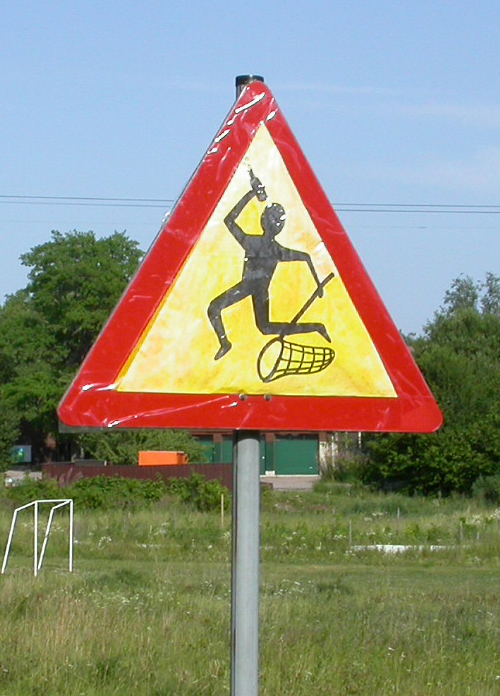
Tvärminne Zoological Station, Finland